 A Stirring Success: National Review Applauds Abbey Gate College’s Brontë
Published on 6th February 2026
A Stirring Success: National Review Applauds Abbey Gate College’s Brontë
Published on 6th February 2026
As previously reported, Abbey Gate College is proud to have received four nominations in this year’s National School Theatre Awards, recognising the exceptional talent and teamwork behind our recent senior production. This national acknowledgement placed our pupils and staff firmly in the spotlight and celebrated the high standard of performance and production that school theatre can achieve. Please read on for the full review.
We were therefore delighted to welcome a representative from the National School Theatre Awards to see Brontë in person, and even more pleased to receive such glowing praise in their official review. The January performance offered audiences a powerful and imaginative interpretation of Polly Teale’s celebrated play, with our pupils delivering a production of remarkable depth, creativity and emotional control.
The NSTA’s reflections capture not only the ambition of the direction and design, but also the maturity and commitment shown by every member of the cast in bringing the lives and literature of the Brontë family vividly to the stage.
Abbey Gate College: Brontë – A Stirring Retelling
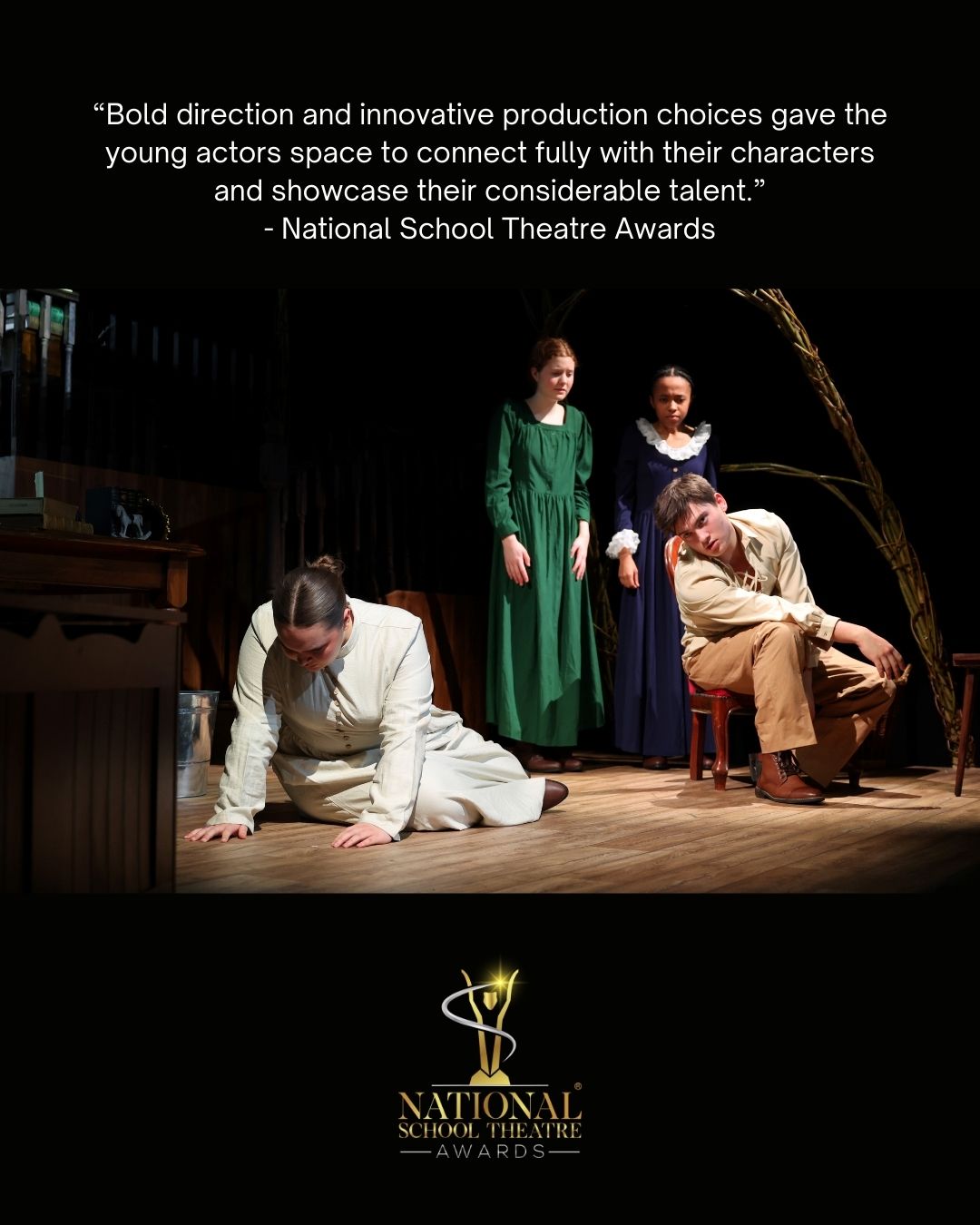
As an NSTA representative, I had the pleasure of seeing an arresting and deeply moving production of Brontë by the pupils of Abbey Gate College on Wednesday 28th January 2026. Bold direction and innovative production choices by Kayleigh Anger gave the young actors space to connect fully with their characters and showcase their considerable talent.
Brontë, by Polly Teale, tells the life story of authors Charlotte, Anne and Emily Brontë, alongside their brother Branwell. Moving between their childhood and adulthood, the play explores the family dynamics between the siblings and their father, Patrick, as the sisters begin to enjoy literary success. Characters from the sisters’ novels appear within the narrative, underlining the inspiration the girls drew from their home life and wove into their writing.
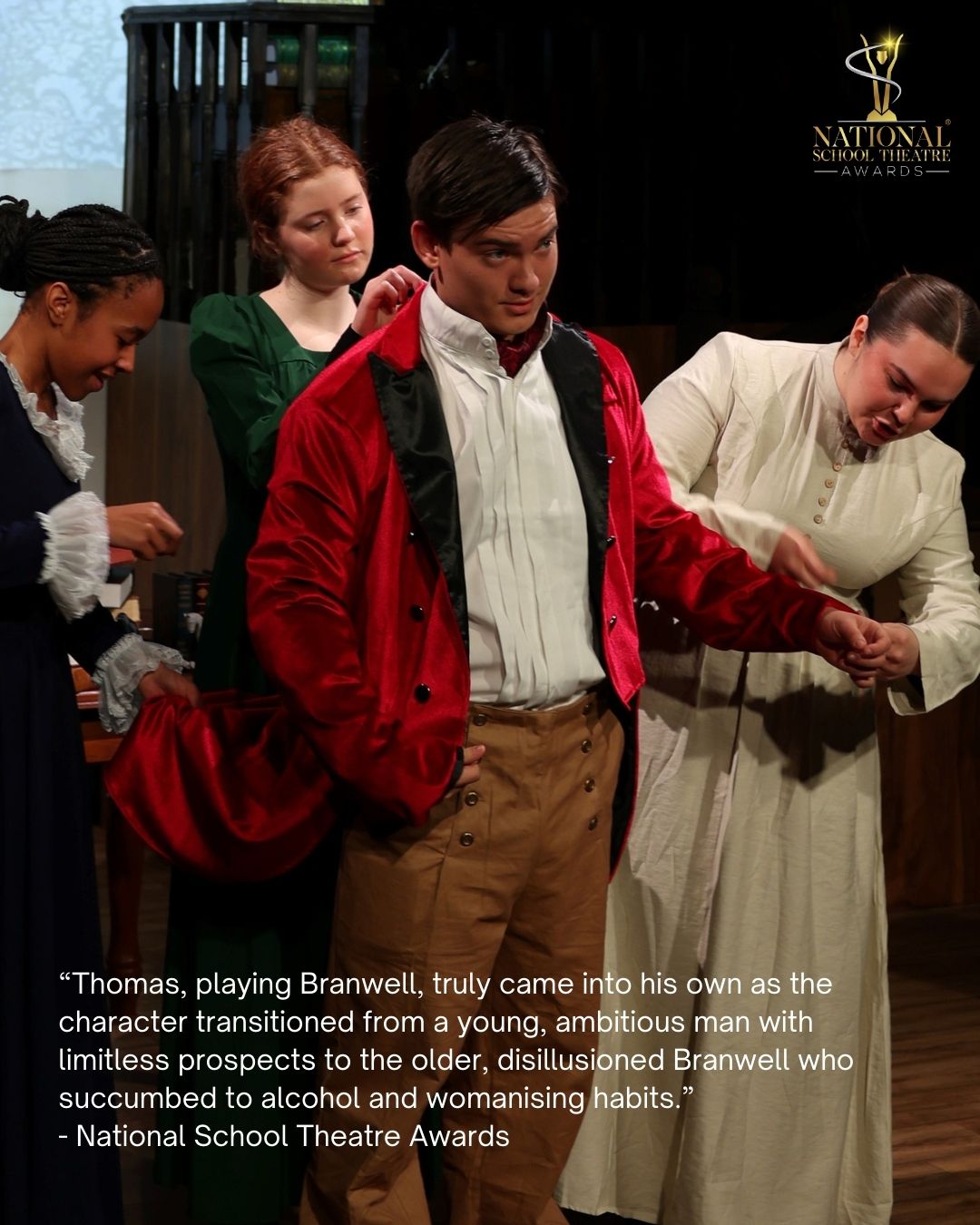
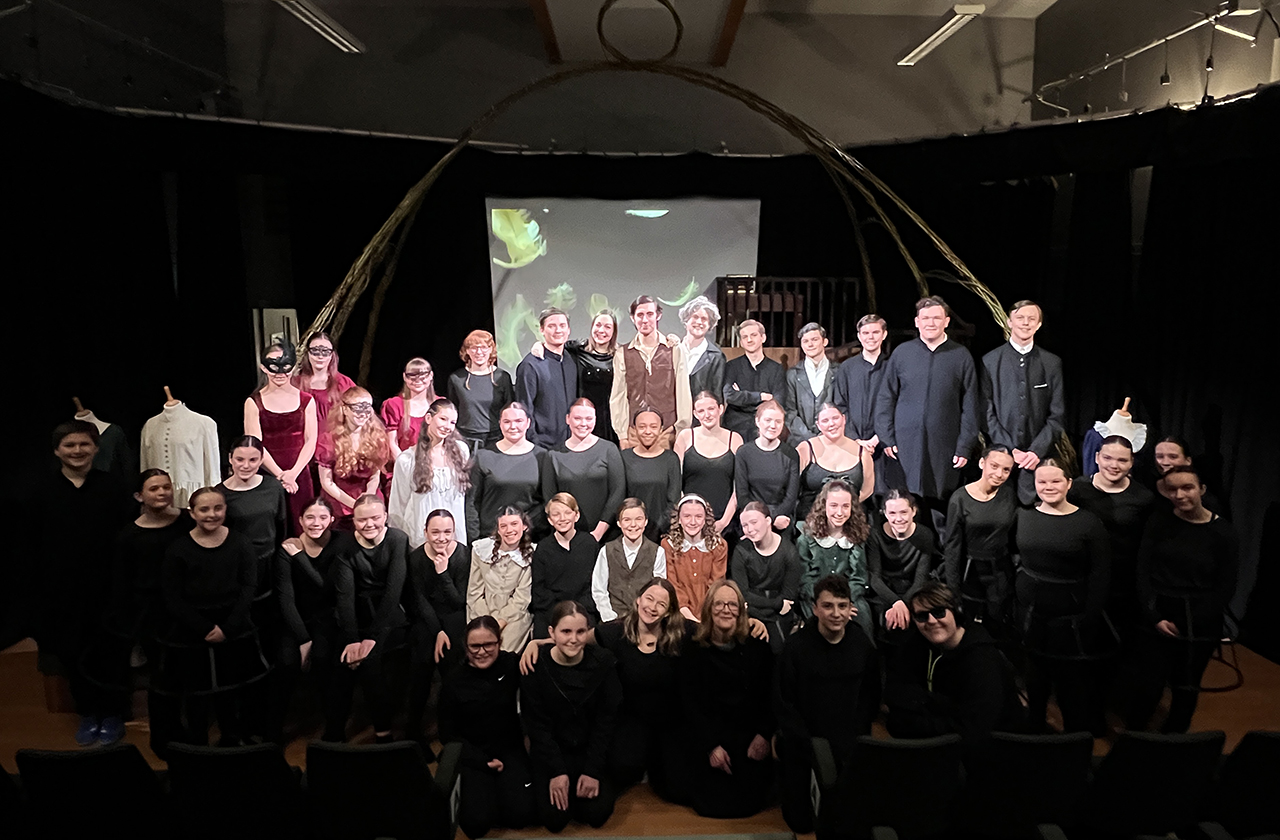
Choreography played an important role in the production, with puppet masters and dancers manoeuvring the central characters through the action, both guiding them and representing their inner voices. Aurelia, as Bertha, was highlyaccomplished, dancing en pointe and weaving effortlessly into the ensemble. The motif of birds and wings ran throughout the production design, from the dominant willow arch over the stage, resembling a birdcage, to the feathers that Emily Brontë’s character, Cathy Earnshaw, obsessively named as she struggled to retain her grip on reality. The use of props and costume was particularly inventive, breaking the fourth wall by having the principal characters don theircostumes on stage while describing their roles to the audience. This preparation helped ease the audience into a fast-moving, multi-layered production that demanded close attention.
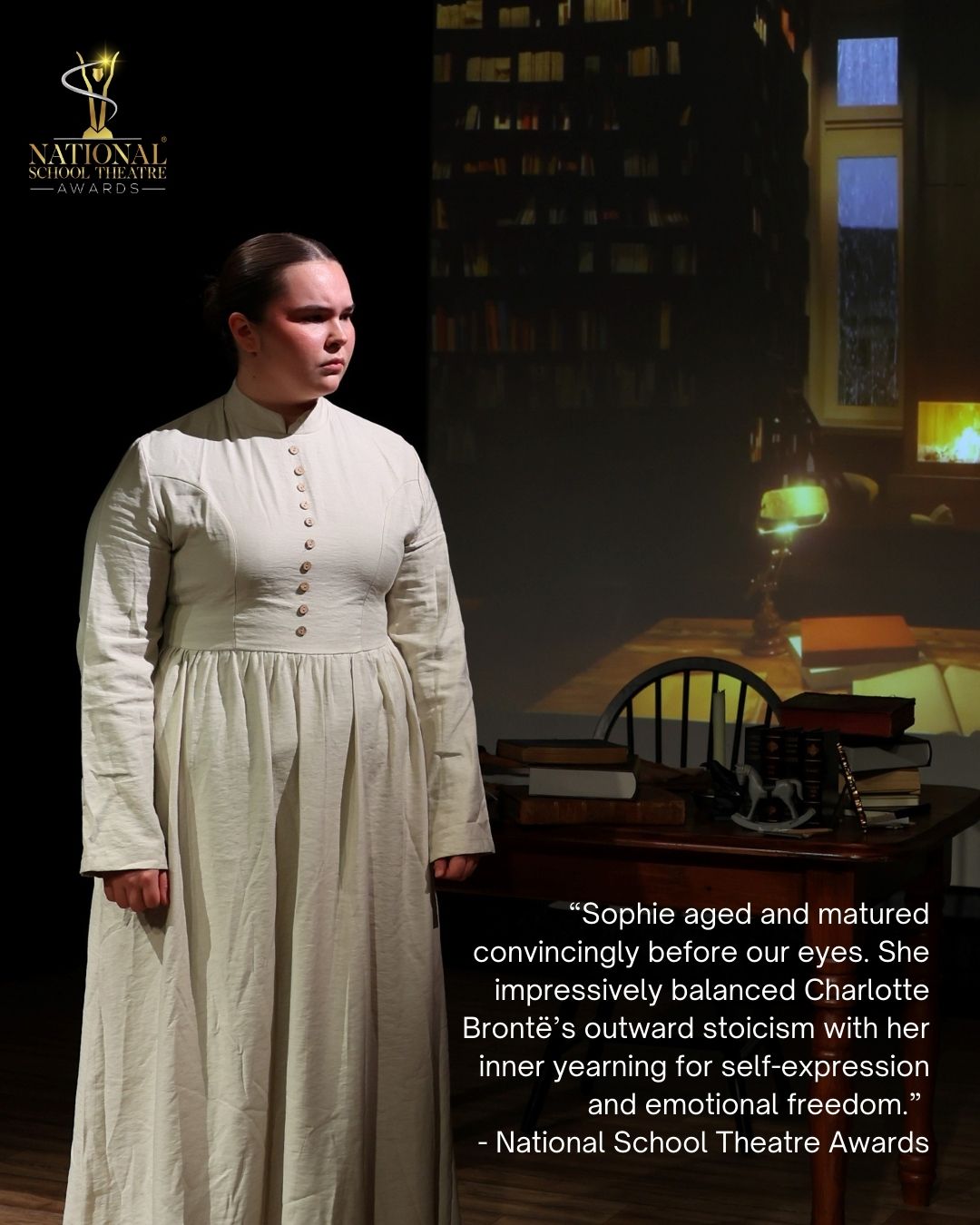
As Charlotte, the eldest sister who assumes a maternal role, Sophie aged and matured convincingly before our eyes. She skilfully conveyed Charlotte’s frustration with her humdrum life and her sense of responsibility towards her siblings and father. During her explosive scenes with Emily and Branwell, the audience was utterly silent and completely captivated. In several particularly demanding moments, Sophie impressively balanced Charlotte’s outward stoicism with her inner yearning for self-expression and emotional freedom.
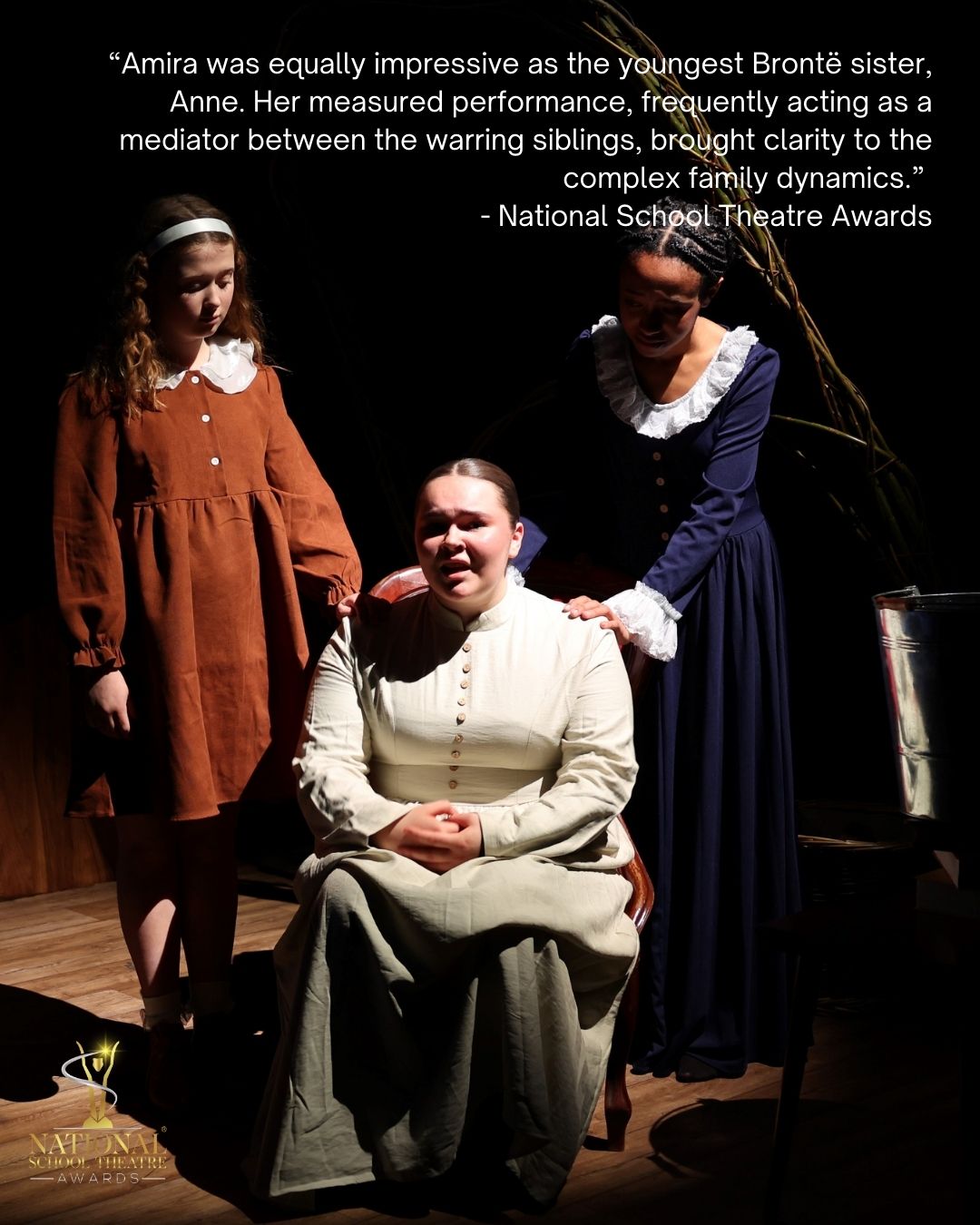
Her co-star Amira was equally impressive as the youngest Brontë sister, Anne, often occupying the middle ground between the reserved Charlotte and the flightier Emily. Her measured performance, frequently acting as a mediator between the warring siblings, brought clarity to the complex family dynamics. The noticeable shift in her demeanour during private moments with Emily, to whom she was closest, allowed Amira to reveal further nuance within her performance.
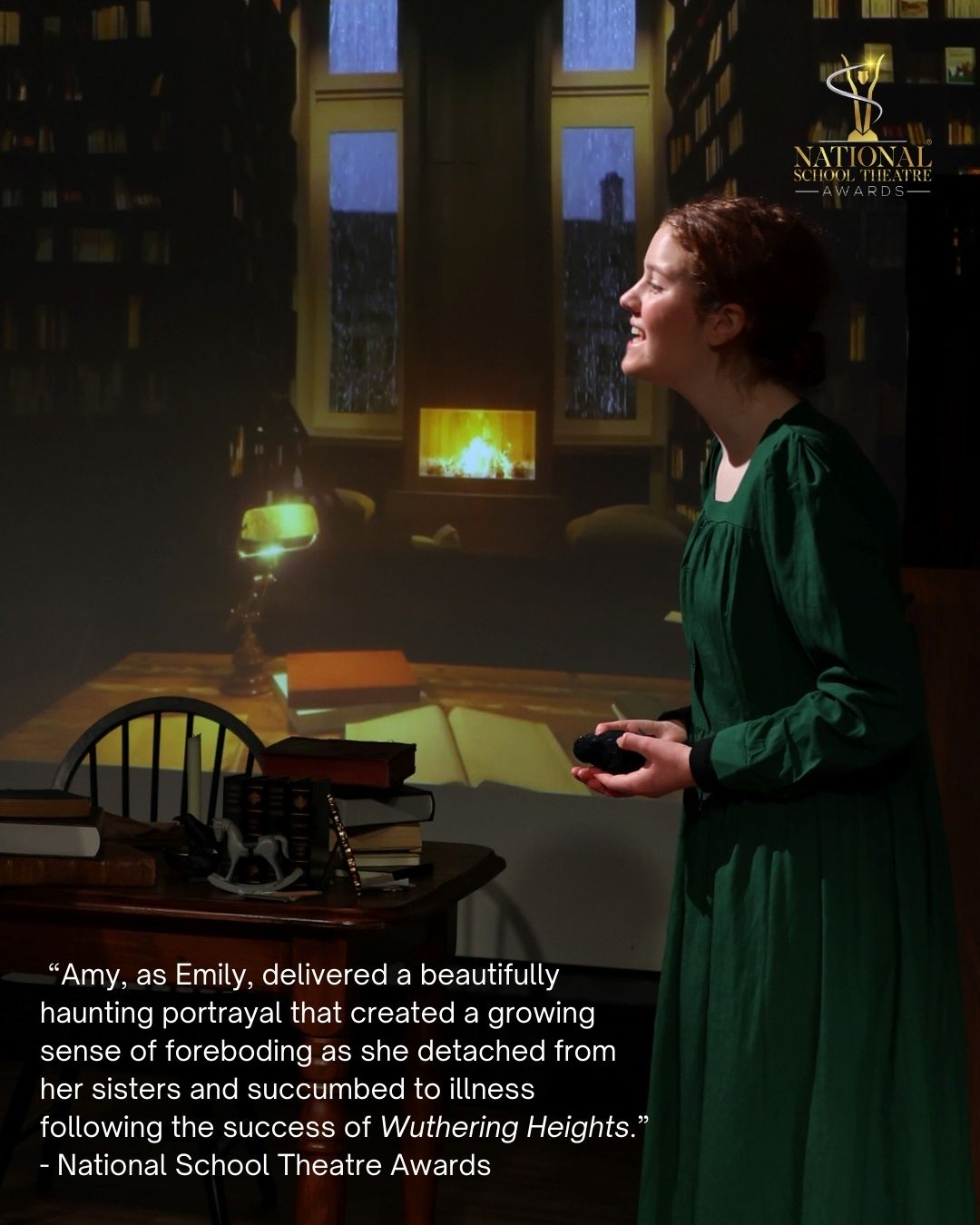
Amy, as Emily, delivered a beautifully haunting portrayal that created a growing sense of foreboding as she detached from her sisters and succumbed to illness following the success of Wuthering Heights. Her death scene, in particular,was deeply moving. The visible physical transformation, from
the restless and constrained Emily to one who had all but relinquished her hold on life, was skilfully realised. Special mention must also go to Keira, who was spellbinding as Cathy from Wuthering Heights. Her expressive, almost dance-like movement commanded attention whenever she appeared on stage.
Thomas, playing Branwell, truly came into his own as the character transitioned from a young, ambitious man with limitless prospects to the older, disillusioned Branwell who succumbed to alcohol and womanising habits. In scenes depicting drunkenness, anger and emotional turmoil, his performance was utterly compelling. His physicality created genuine menace during his assault on Charlotte, and in the denouement of this scene, when he collapsed into her lap and begged her to read him to sleep, the emotional contrast was strikingly effective.
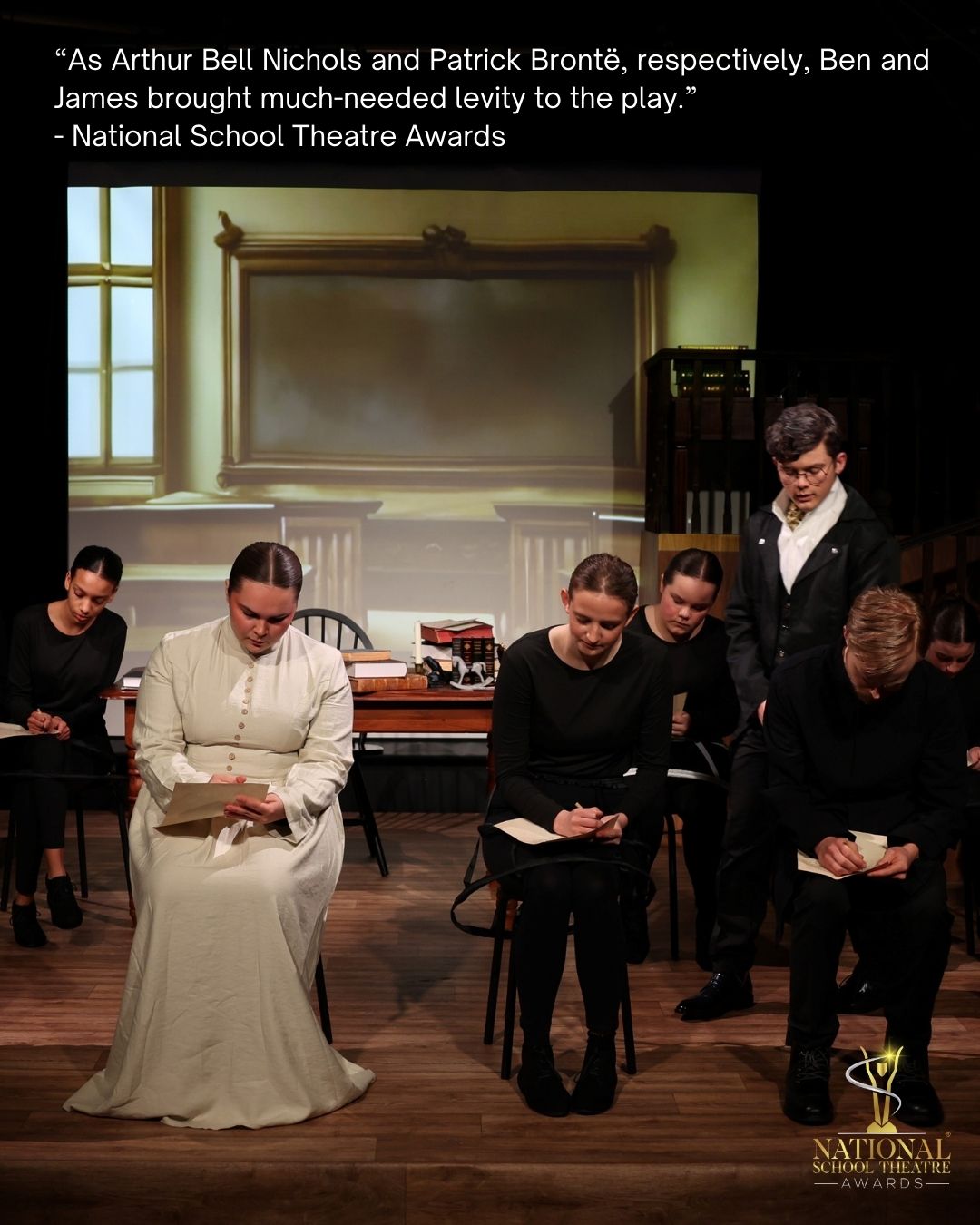
As Arthur Bell Nichols and Patrick Brontë, respectively, Ben and James brought much-needed levity to the play. In a production where humour is understandably sparse, it was refreshing to see the bumbling Bell Nichols with his heartwarming affection for Charlotte, and the immediate gravitas brought by Patrick to cut through the squabbling of the siblings.
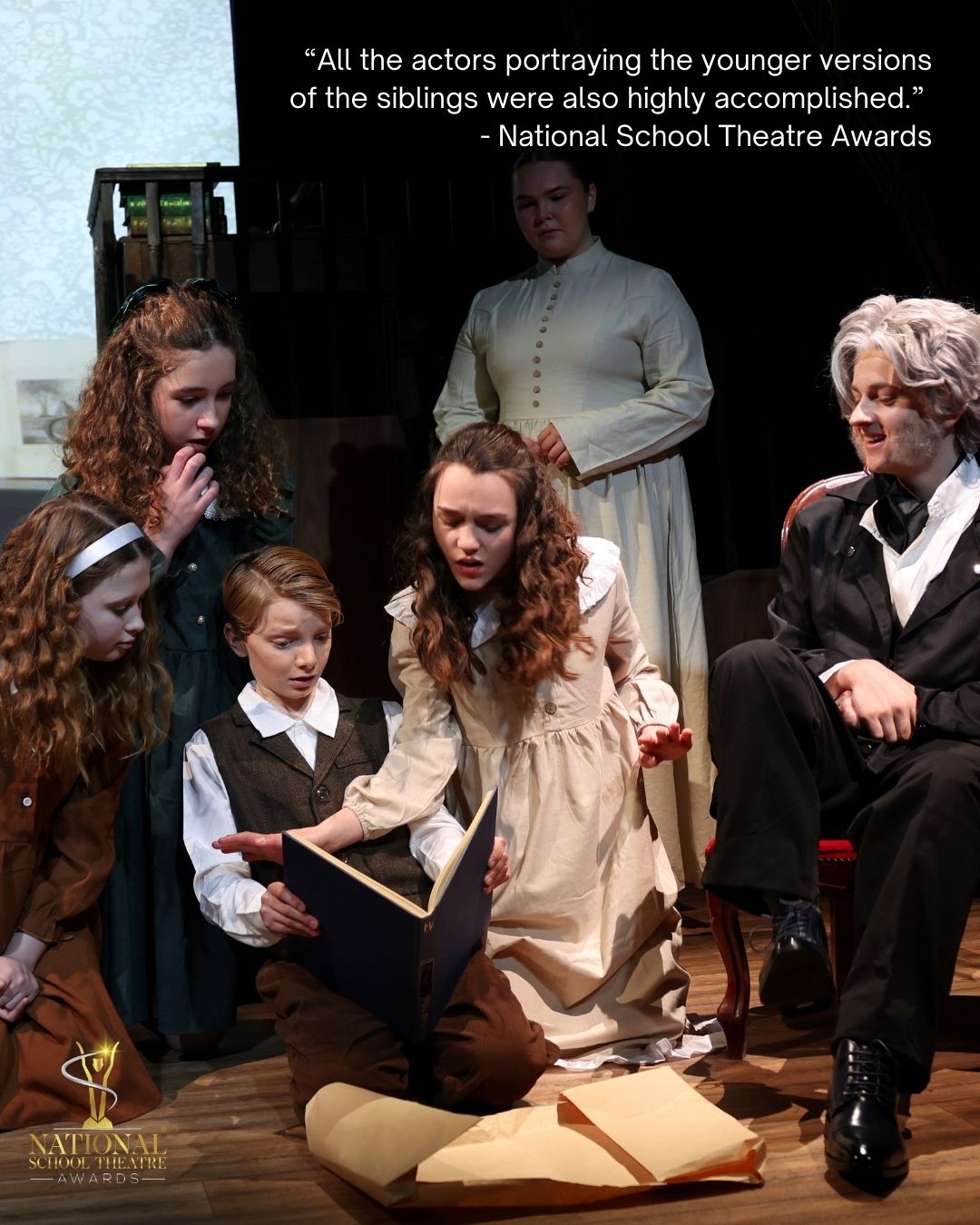
All the actors portraying the younger versions of the siblings were also highly accomplished. Imogen, as young Anne,skilfully demonstrated through her reactions how Anne was torn between her sisters, while Chloe, as young Emily, captured the character’s playfulness and curiosity before the weight of expectation descended. William brought wonderful youthful exuberance to young Branwell. As the younger and older versions of the character frequently sharedthe stage, it was essential to establish clear parallels between them, and William achieved this with great success. In hisscenes with young Charlotte, played by Charlotte, their lively energy was infectious and made the later companion scenes featuring the older characters even more tragic. William’s moments of childhood make-believe wereparticularly affecting, highlighting the tragic contrast between the joyful child and the deeply troubled adult he would become.
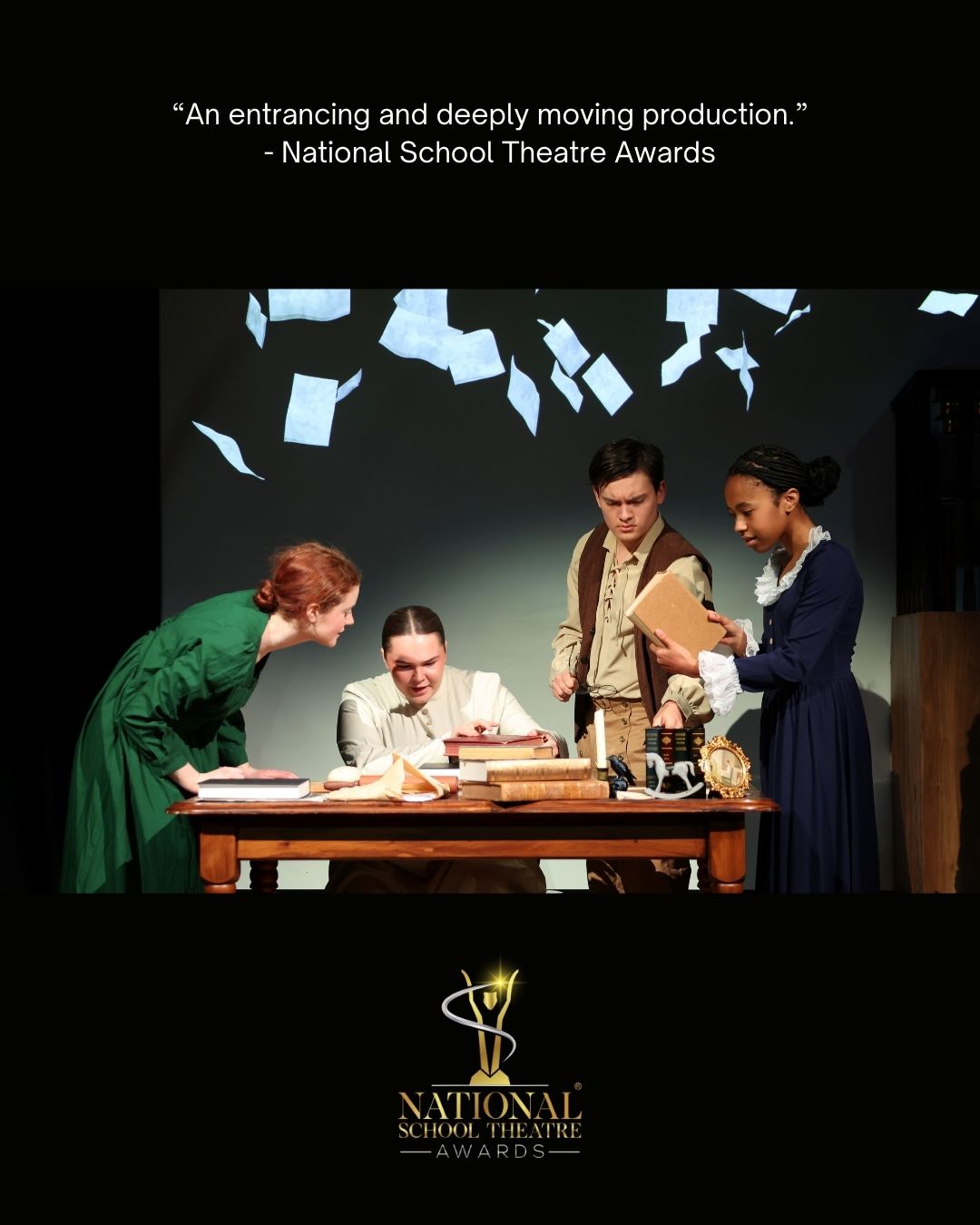
This was an entrancing and deeply moving production. To take a play that is notoriously difficult to stage effectively and present it with young actors was a phenomenal achievement. The clear emotional connection the performers establishedwith their characters was the production’s greatest strength, ensuring the audience remained fully engaged throughout. Under the deft direction of Kayleigh Anger, the cast delivered a performance of remarkable maturity and control. This production demonstrates the unique power of school theatre to offer fresh and insightful interpretations of established works.
National School Theatre Awards
@schooltheatreawards